The wings

Learning the fold from winged insects

A structure that begins compact around the body, opens to a much larger surface that can face the sun, and folds back again, every day, without fail. Insects have done this for 300 million years.

The requirement

What a natural model has to do

Flowers that open and close, growth in plants, shells and bird wings were all considered. Bird wings led to insects, and insects turned out to be the richest source of all.

At rest

Begin compact

A small, aerodynamic state around or on top of the body.

Deployed

Open wide

Expand to a much larger surface that can be turned toward the sun.

Return

Fold back

Return to the compact state, repeatedly and reliably.

Five wing structures

The first five insects

Each insect was traced in plan view on a millimetre grid, folded and extended, and the areas compared. The multiple is extended area divided by folded area. The plates are shown as they were drawn.

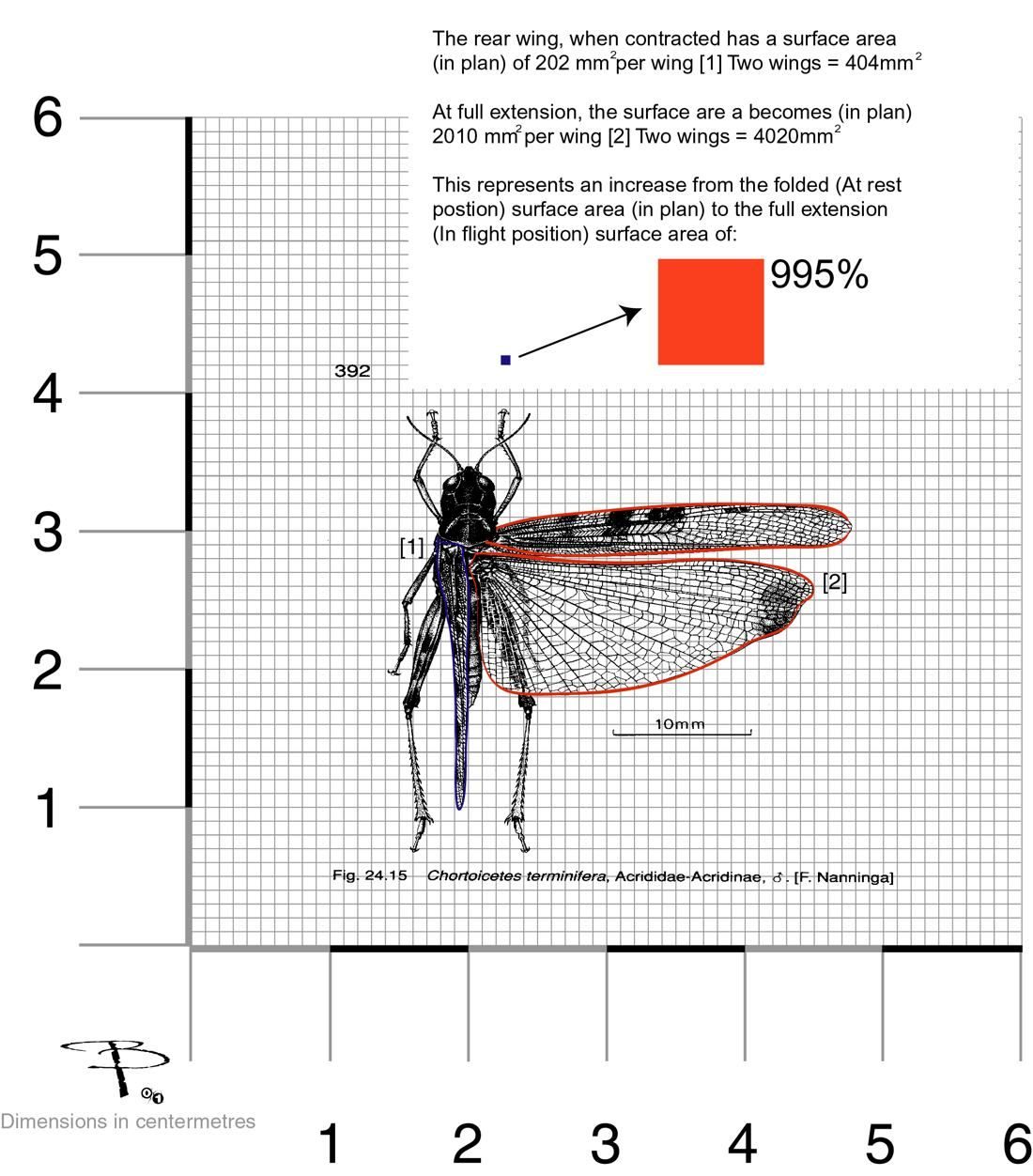
Australian plague locust, traced in plan view on a millimetre grid, folded and extended
WS1 plate from the original study, kept as scanned.

WS1

Australian plague locust

Chortoicetes terminifera

The broad hindwing is pleated like a fan and stowed beneath a narrow, leathery forewing. In flight it opens radially from the wing base into a surface ten times its stowed footprint.

Folded404 mm²
Extended4,020 mm²
Multiple9.95×

For design. Radial fan pleating from a single hinge gives the largest area gain of the five. Suited to large deployments when parked or moving slowly.

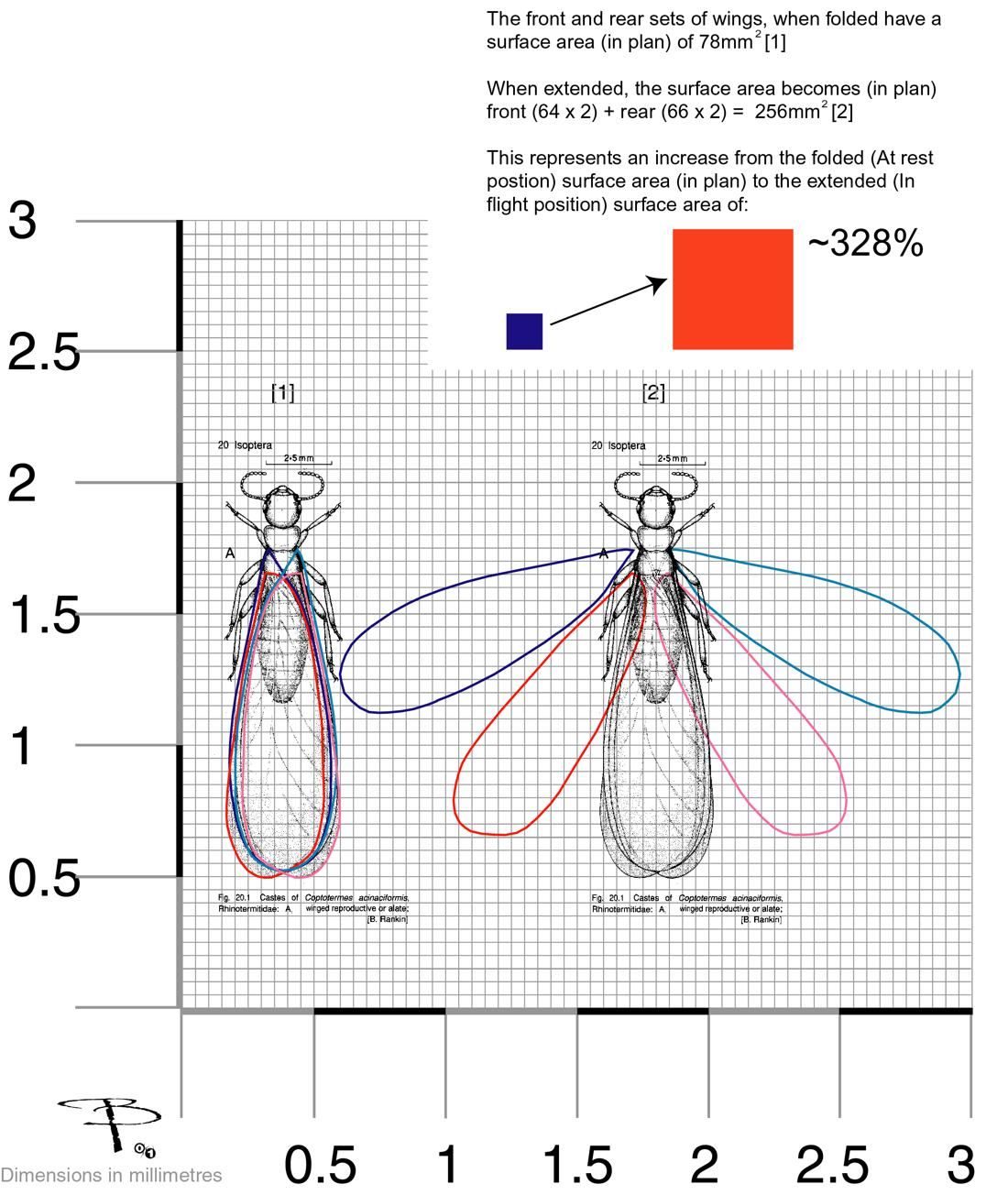
Termite alate, traced in plan view on a millimetre grid, folded and extended
WS2 plate from the original study, kept as scanned.

WS2

Termite alate

Coptotermes acinaciformis

Four long, flat wings lie stacked along the abdomen. They swing out from a single root on each side without any folding of the membrane.

Folded78 mm²
Extended260 mm²
Multiple3.33×

For design. Stacked rigid blades rotating from a hinge point. The simplest mechanism and the lowest stowed profile.

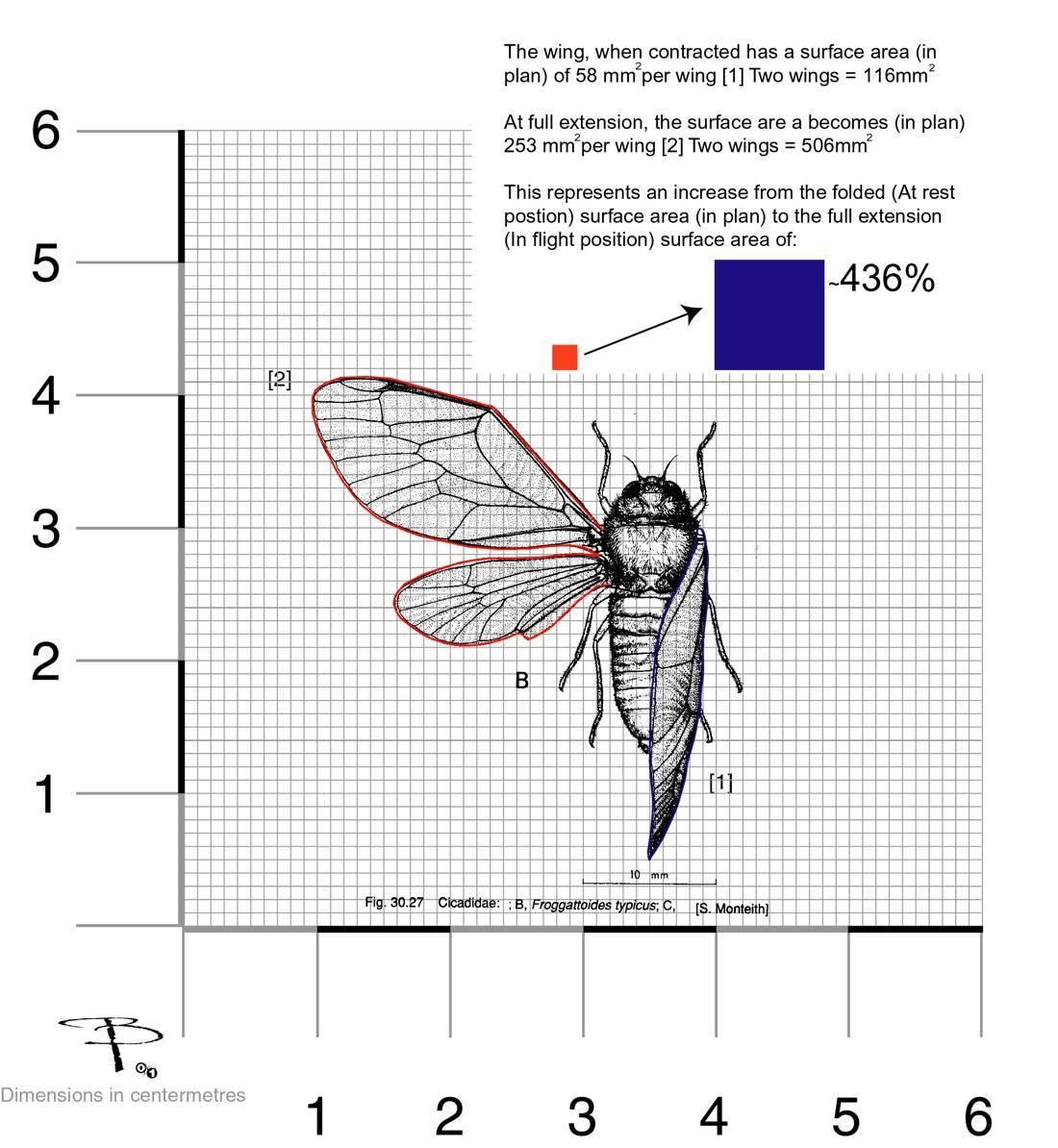
Eastern bent-wing cicada, traced in plan view on a millimetre grid, folded and extended
WS3 plate from the original study, kept as scanned.

WS3

Eastern bent-wing cicada

Froggattoides typicus

Clear, stiff wings with strong veins rest in a tent over the body, forming a smooth roof. They rotate outward and forward into a wide flight surface.

Folded116 mm²
Extended506 mm²
Multiple4.36×

For design. The resting wings are the body’s envelope. A tented canopy of framed panels can be both skin and collector, and the veins suggest a frame for thin cells.

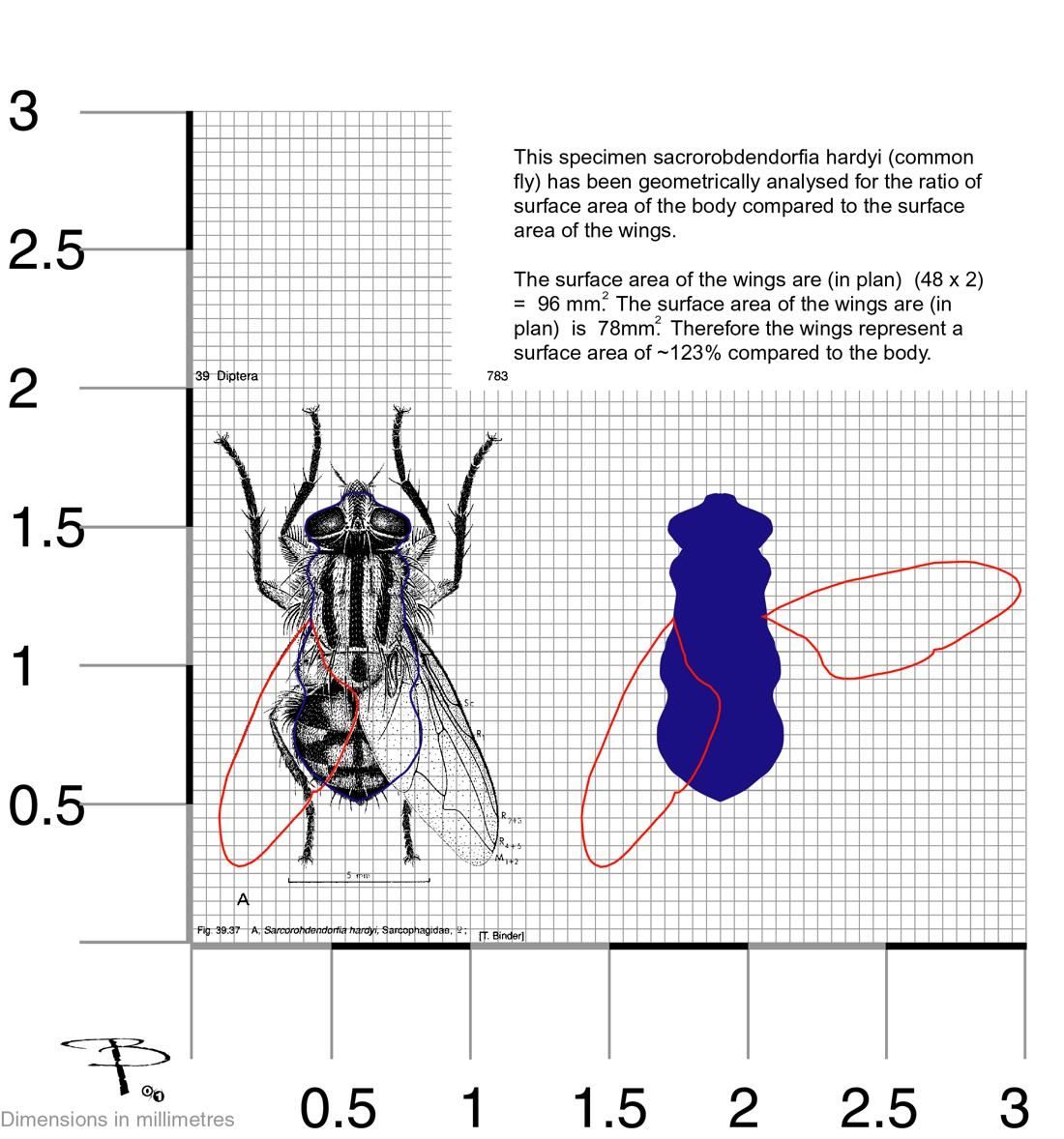
Flesh fly, traced in plan view on a millimetre grid, folded and extended
WS4 plate from the original study, kept as scanned.

WS4

Flesh fly

Sarcorohdendorfia hardyi

The wings do not fold. They sweep back over the body at rest, with a total area only a little larger than the body.

Folded78 mm² body
Extended96 mm² wing
Multiple1.23×

For design. The baseline case: fixed surfaces with minimal mechanism. It sets the benchmark each folding structure has to beat.

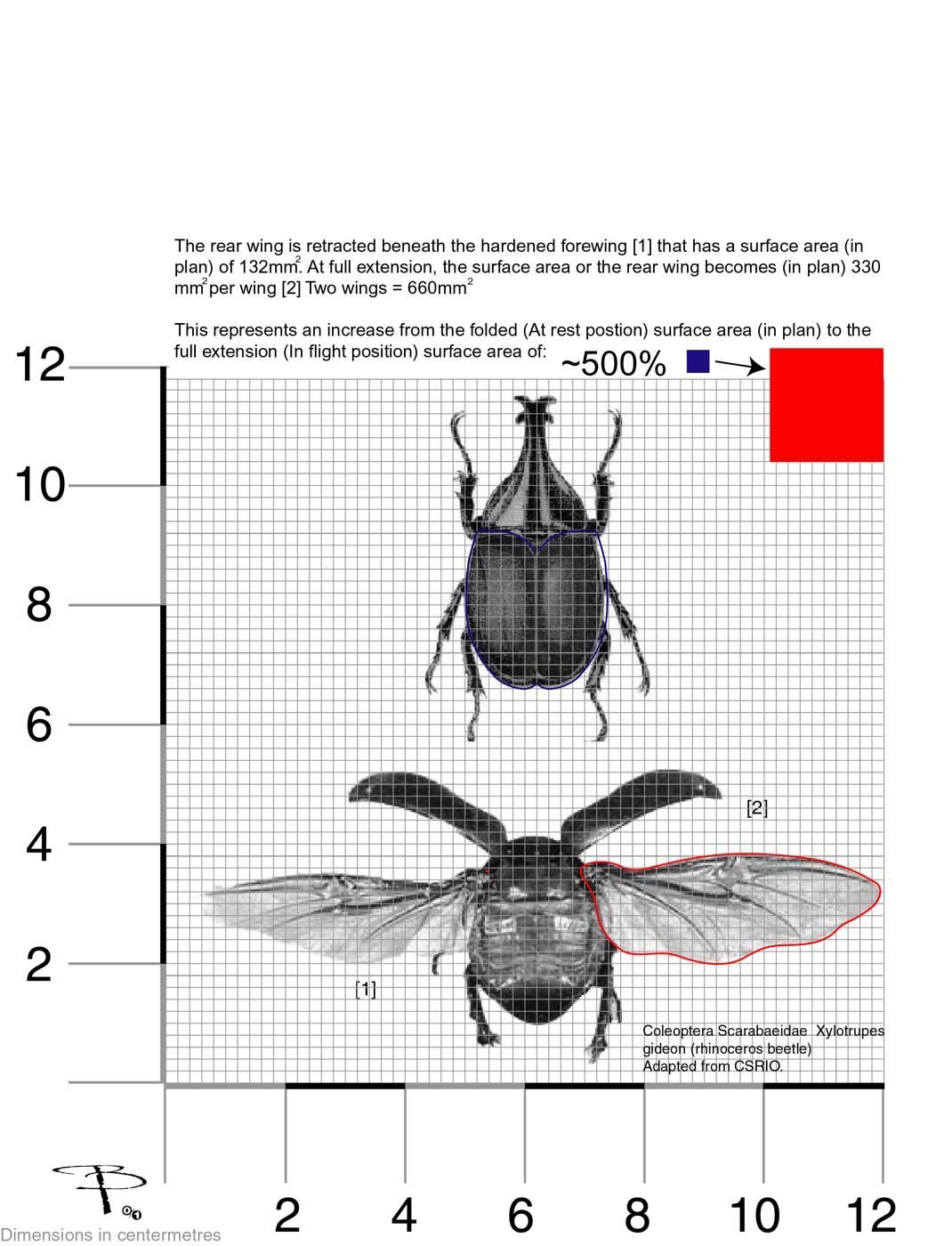
Rhinoceros beetle, traced in plan view on a millimetre grid, folded and extended
WS5 plate from the original study, kept as scanned.

WS5

Rhinoceros beetle

Xylotrupes gideon

Hardened forewings form a shell. Beneath them the membranous hindwings are folded origami-fashion. In flight the shell lifts and the hindwings unfold to five times the covered area.

Folded132 mm²
Extended660 mm²
Multiple5.00×

For design. A protective carapace over a folded collector: a hard body that shields a delicate surface when stowed.

The re-measure

Fifty-eight wings, eight ways to fold

Instead of museum specimens, the atlas measures the plates of R. J. Tillyard’s The Insects of Australia and New Zealand (1926), a public-domain textbook printed at natural size.

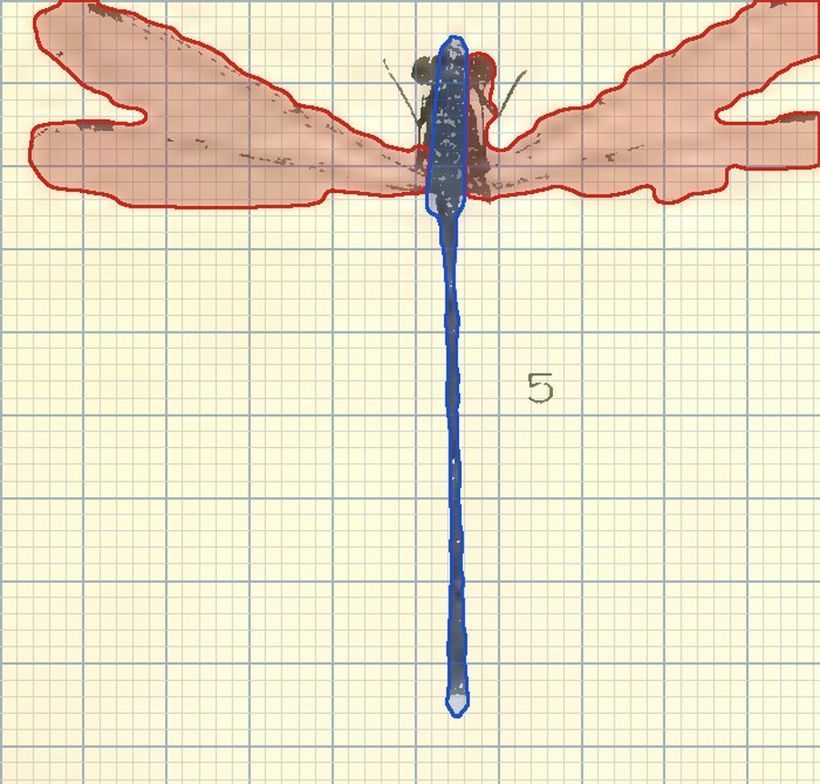
Each figure is scanned at 360 dpi, scaled, traced, and split into body (blue) and spread wing (red). The body is the smallest footprint the wings could be stowed within, so wing area over body area is the collecting area a design gains over its stowed plan. Three new types joined the original five: the vertical clap, the lengthwise pleat and the earwig fan.

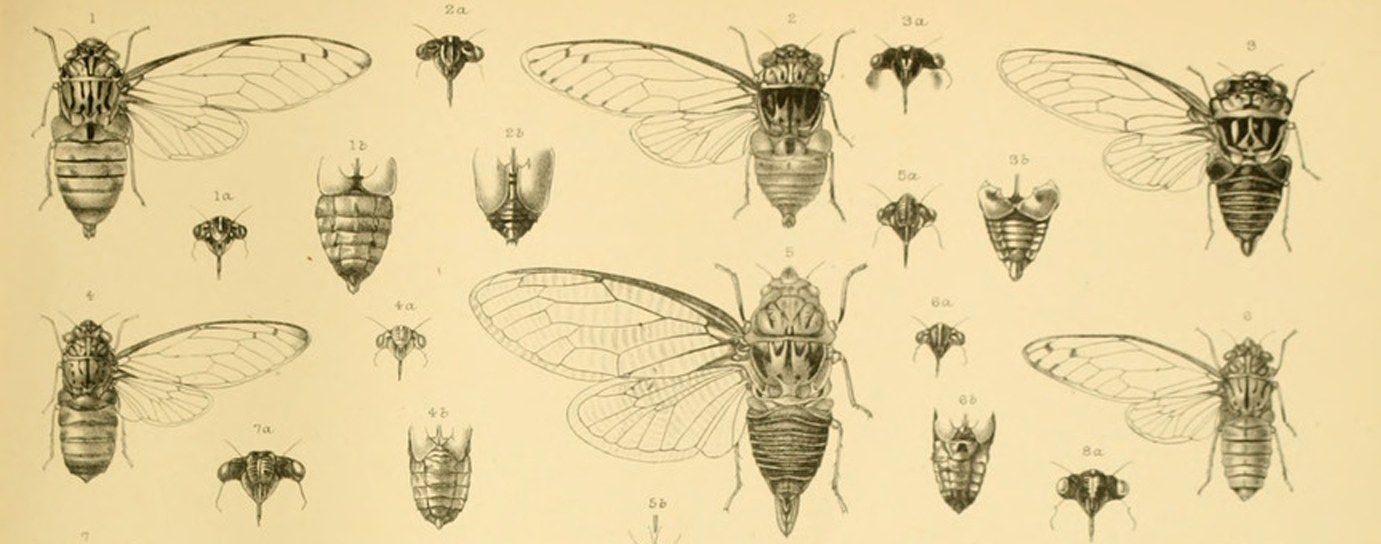
Part of a plate of cicadas drawn with their wings spread on one side
Cicadas from W. L. Distant’s plate X, as printed. Public domain.
A ringtail damselfly traced on a millimetre grid, body in blue, wings in red
Ringtail damselfly, Austrolestes cingulatus, traced from Tillyard Plate 3. Wings 7.41× the body.
TypeInsectsHow it stowsArea gained
WS1 Fan pleat under a coverGrasshoppers, stick insects, mantids, stonefliesA narrow, hardened forewing lies over a broad hindwing that closes along radial pleats like a hand fan.10.6×
WS2 Flat stackTermites, sawflies, bees and waspsNo fold at all. The wings lie flat, one over the other, and swing out from a single root.2.0×
WS3 Tented roofCicadas, lacewings, caddisfliesFramed wings rest roof-wise over the body and form its outer envelope. They do not fold; they rotate out to fly.8.4×
WS4 Fixed spanFlies and dragonfliesThe wings never fold. The baseline every folding type has to beat, and the most precisely controlled wing there is.1.5×
WS5 Shell over origamiBeetles and ladybirdsHard wing cases lift, then a hindwing folded across its length springs open at its crease.5.0×
WS6 Vertical clapButterflies and damselfliesThe wings close upright over the back, the smallest stowed footprint of all.8.6×
WS7 Lengthwise pleatPaper wasps and potter waspsEach forewing folds once along its length. A click at the base gives it two stable positions.2.2×
WS8 Earwig fanEarwigsA fan that spreads while its cross-creases snap flat. Bistable: it holds open and shut with no muscle at all.10×

Medians of wing area over body area from the Tillyard plates, except WS5 (folded to open, from the 2003 rhinoceros beetle and published laboratory ratios) and WS8 (published ratios, as Tillyard draws earwigs with their wings closed).

What the numbers say

Area, protection, locking

Area

The fan pleat and the earwig fan give the largest gains, about ten times or more. The tented roof and vertical clap reach similar multiples but rest outside the body.

Protection

Only the fan pleat, the shell over origami and the earwig fan keep the collector under cover when stowed: what matters for anything that must survive hail, branches and dust.

Locking

The lengthwise pleat and the earwig fan hold open or shut without power, which removes a lock and the motor that drives it.

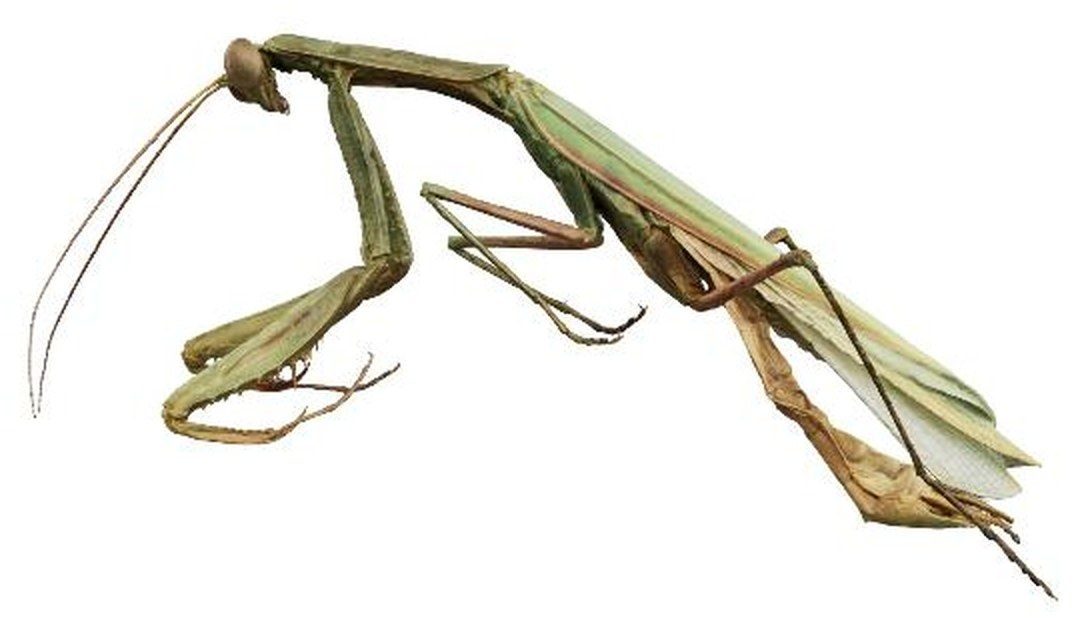
A European mantis from the side, the pleated hindwing tucked beneath the hardened forewing
Fan pleat under a cover. European mantis, Mantis religiosa. Insects 360 scan, University of Zurich, CC BY-SA.
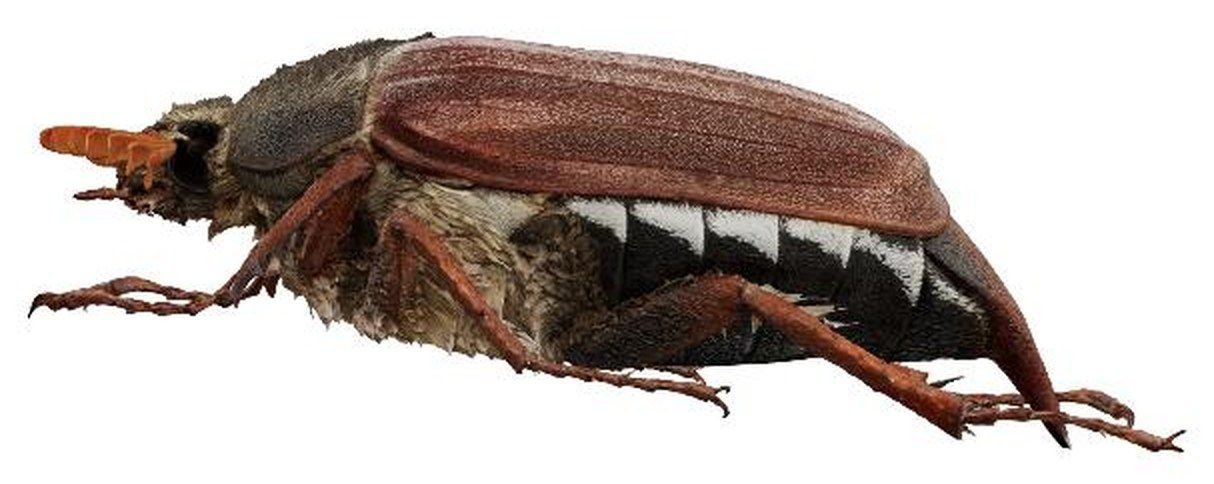
A cockchafer beetle from the side, its domed wing cases over the abdomen
Shell over origami. Cockchafer, Melolontha melolontha. Insects 360 scan, University of Zurich, CC BY-SA.

Living wings

A wing is plumbed into the body

Insect wings are not inert. Their veins carry blood, air tubes and nerves, and small hearts in the thorax draw the flow back.

So the atlas records veins as structure, plumbing and sensing at once. A solar surface turns most of the light that falls on it into heat; veins that carry coolant can move that heat away, as a dragonfly moves heat through its body with its heart.

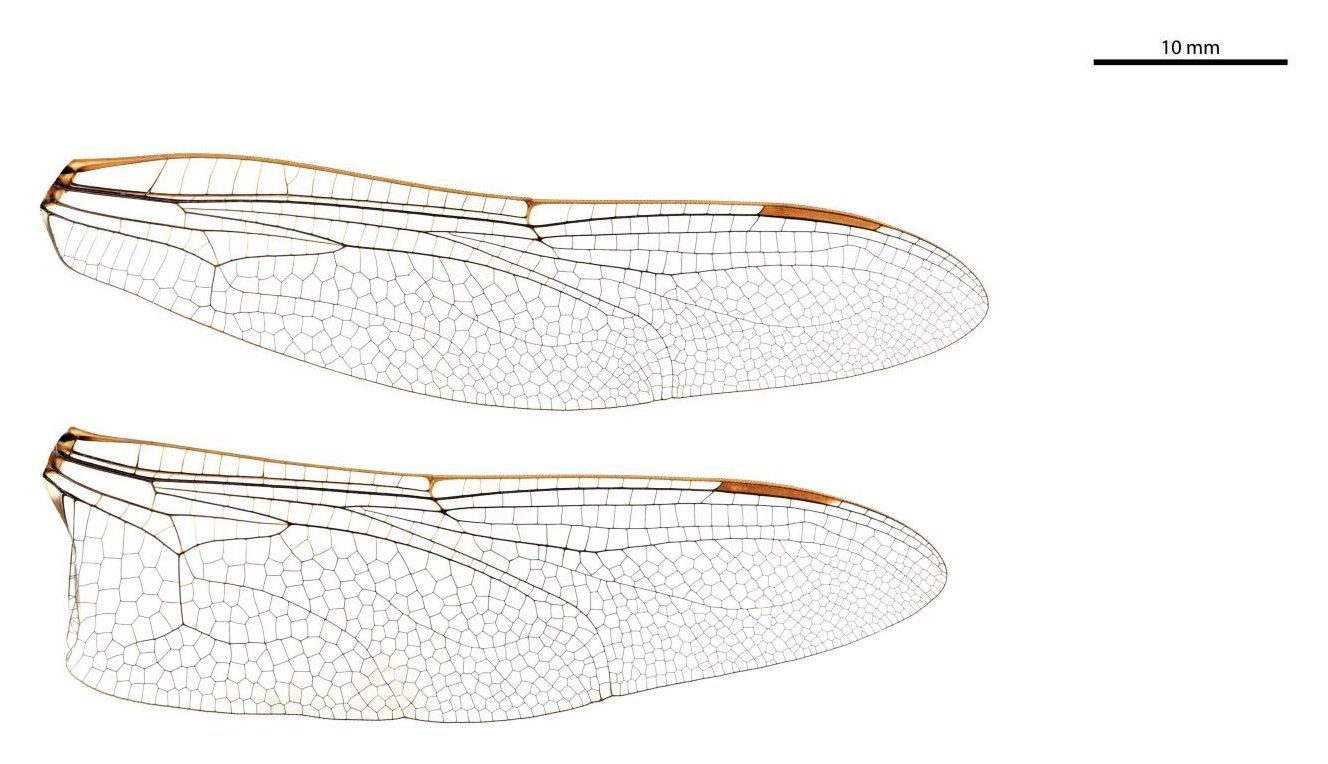
The right forewing and hindwing of a male Australian emperor dragonfly, showing thousands of small cells between dark veins, with a 10 mm scale bar
Right wings of a male Australian emperor, Anax papuensis. Australian Museum specimen K305671, photograph by John Tann, CC BY 2.0. The venation behind every page of this site is traced from this photograph.

The dragonfly

Four wings, one small brain

Every other insect here is a lesson in folding. The dragonfly is a lesson in flying, sensing and control.

Corrugation

A dragonfly wing looks flat but is folded in section. Main veins run in ridges and valleys, like corrugated iron, and cross-veins tie them into thousands of cells.

The nodus

A flexible joint with a mechanical stop at the kink in the leading edge. It lets the outer wing twist for lift, and stops it twisting too far.

The pterostigma

A small, heavy cell near each tip. It acts as a tuned mass that stops the wing fluttering itself apart, which suggests a weighted tip for any large wing held in wind.

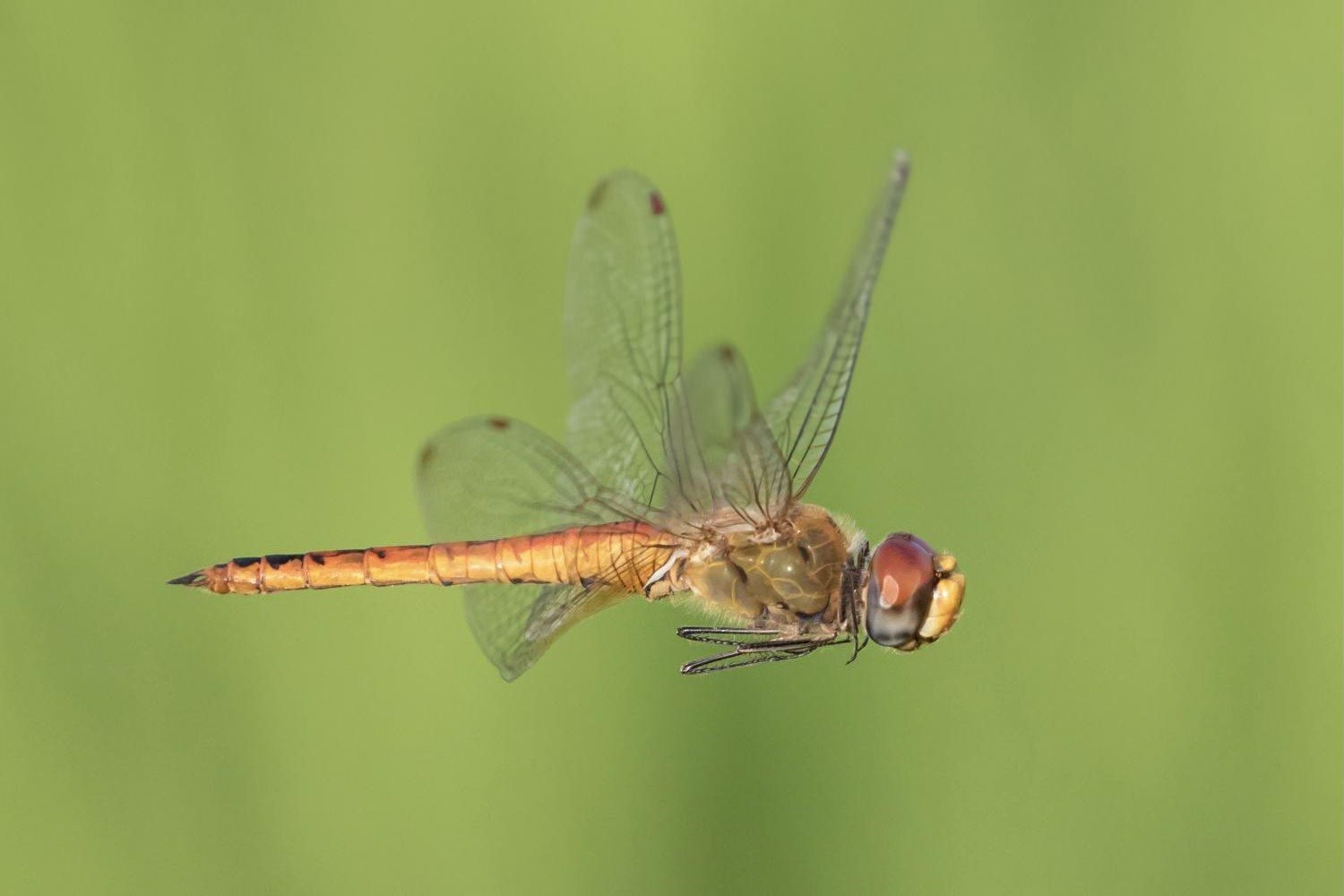
A globe skimmer dragonfly in flight, its four clear wings raised
A globe skimmer, Pantala flavescens, which crosses the Indian Ocean on a migration of 14,000 to 18,000 km. Photograph by Basile Morin, CC BY-SA 4.0.

Each of the dragonfly’s four wings has its own muscles. Changing the timing between the pairs lets it hover, fly backward and sideways, glide, and catch other insects in the air up to 95% of the time.

Its brain is the model for the controller a self-energising product will need: sensing, attention, prediction and reflexes, running the wings and the energy together.